
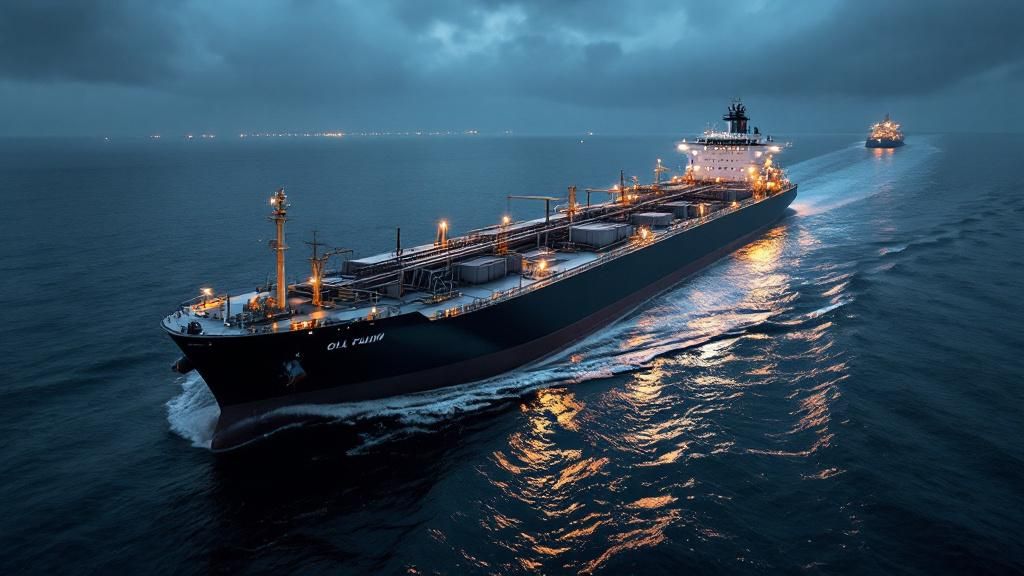
As the crisis in the Middle East moves into its second month, destabilising worldwide energy markets and pushing crude costs to record highs, China has positioned itself as an surprising mediator in the escalating crisis. President Xi Jinping’s administration has partnered with Pakistan to present a five-part peace proposal designed to establishing a truce and restoring access to the critically important Strait of Hormuz, which has been blockaded amid the US-Israel military campaign against Iran. The move represents a major policy change for Beijing, whose initial response to the war had been notably restrained. The intervention comes as Donald Trump suggests American military action could be completed within two to three weeks, yet provides no concrete vision of what resolution or aftermath might follow. China’s strategic move demonstrates both an chance to influence regional diplomatic efforts and a tactical response to American influence ahead of crucial trade negotiations between Xi and Trump in the coming month.
Why China Is Stepping Into the Fray
Beijing’s decision to actively mediate the conflict in the Middle East represents a strategic shift from its previously muted diplomatic stance. Pakistan’s foreign minister visited the capital of China to obtain assistance for peace discussions, and the effort has succeeded. China’s Foreign Ministry then backed the joint peace initiative, emphasising that “talks and peaceful resolution” remain “the only viable option to resolve conflicts”. This change demonstrates Beijing’s acknowledgement that prolonged instability jeopardises its financial stakes, particularly as international energy disturbances could ripple across global supply networks and weaken China’s export-dependent recovery strategy.
Whilst crude oil supplies dominate discussions of Middle East conflict, China’s objectives goes further than energy security. As the world’s largest crude importer, Beijing keeps sufficient strategic reserves to endure near-term disruptions. Rather, the fundamental concern is economic stability. Matt Pottinger, head of the China Program at the Foundation for Defense of Democracy, notes that global economic slowdown caused by energy shocks would directly harm Chinese manufacturing and export sectors. With China’s home economy struggling, Xi Jinping needs a stable international environment to maintain the growth dependent on exports vital to domestic recovery and preserving political legitimacy.
- China possesses petroleum stockpiles adequate for several months of disrupted supply
- Worldwide economic deceleration from energy shocks threatens Chinese export competitiveness
- Stable global conditions crucial for rejuvenating China’s faltering home economy
- Peace proposal occurs ahead of key Xi-Trump negotiations scheduled for the coming month
Economic Interests Driving Political Engagement
China’s participation in regional peace discussions cannot be separated from Beijing’s overarching financial goals. The conflict risks destabilising global markets at a particularly vulnerable moment for the economy of China, which is grappling with weak domestic consumption and declining consumer confidence. Xi Jinping’s leadership has made economic revitalisation a central objective, placing considerable emphasis on overseas trade to offset domestic weakness. Any prolonged disruption to global commerce—whether through supply disruptions, disruptions to supply chains, or general market turbulence—substantially damages Beijing’s recovery approach and risks exacerbating internal economic pressures that could threaten political security.
Beyond immediate energy concerns, China recognizes that prolonged conflict in the Middle East would transform global geopolitical alignments in ways unfavourable to Beijing’s interests. A extended military conflict could enhance US military presence in the region, deepen US-Israel cooperation, and potentially isolate China from key trading partners. By presenting itself as a non-aligned mediator rather than a biased actor, Beijing aims to preserve strategic flexibility and show to regional powers that China provides an alternative to US-led security frameworks. This strategy enables Xi to wield soft power whilst at the same time protecting China’s commercial networks and investment portfolios across the Middle East.
The Supply Chain Vulnerability
The Strait of Hormuz, through which roughly one-third of global seaborne crude oil travels, represents a key strategic point for global trade. Interruptions in this essential passage would cascade through worldwide supply networks, impacting not merely petroleum markets but the delivery of manufactured goods, primary resources, and inputs vital for modern economies. China, as the international leading supplier of completed items and a nation dependent on ocean trading pathways, encounters heightened risk to these disturbances. Blockades or armed conflicts in the waterway could delay shipments, elevate premium rates, and establish uncertain market circumstances that compromise China’s exporters’ market standing in worldwide trading environments.
The financial impacts of strait closure would be particularly severe for Chinese manufacturing sectors reliant on JIT supply models. Vehicle producers, tech manufacturers, and chemical firms operating across Asia require predictable supply chains and stable shipping costs. Military tensions in the Persian Gulf would introduce uncertainty that manufacturers cannot manage without significant cost increases or output delays. By championing the reopening and protection of sea lanes, Beijing presents itself as a defender of global commercial interests whilst simultaneously shielding its own industrial base from outside disruptions that could cause manufacturing closures and unemployment.
Growing Commercial Footprint
China’s economic involvement across the Middle East transcends oil imports. Chinese companies have poured billions in infrastructure developments across the region, port development, and energy facilities through the Belt and Road Initiative. These investments signify sustained business engagements that necessitate political stability to generate returns. Conflict could undermine current development work, impede income streams from current ventures, and discourage further capital deployment in the region. By facilitating peace negotiations, Beijing safeguards its existing assets and sustains progress for expanding its commercial footprint in Middle Eastern markets, cementing China’s role as an vital commercial ally for development across the region.
The diplomatic initiative also functions to reinforce China’s connections with local authorities and non-state actors who increasingly perceive Beijing as a reliable commercial partner. Unlike Washington, which links financial support to political requirements and security alignments, China has built relationships founded on economic reciprocity. A successful peace initiative would strengthen Beijing’s standing as a pragmatic actor prepared to invest diplomatic resources in stability across the region. This strengthened reputation converts to trading gains, preferential treatment for Chinese companies bidding on infrastructure projects, and deeper integration of Middle Eastern economies into China’s trade and investment networks.
A History of Local Mediation
China’s emergence as a peace broker in the Middle East does not occur in a vacuum. Beijing has spent the past decade building diplomatic ties across the region, positioning itself as a impartial player willing to engage with state and non-state entities alike. This approach differs significantly from Western diplomacy, which often emphasises security alliances and ideological alignment. China’s readiness to sustain engagement with Iran, Saudi Arabia, and other regional actors simultaneously has positioned Beijing as a credible intermediary. The current peace initiative builds upon foundations laid through years of patient diplomacy and economic engagement, indicating that China’s involvement carries weight beyond simple symbolic acts or strategic opportunism.
| Initiative | Year | Outcome |
|---|---|---|
| Iran-Saudi Arabia Diplomatic Agreement | 2023 | Restored diplomatic relations after seven-year rupture; established foundation for regional dialogue |
| Afghanistan Reconstruction Dialogue | 2021-2024 | Convened multiple rounds of talks involving regional stakeholders and Taliban representatives |
| Palestine-Israel Humanitarian Discussions | 2022-2024 | Facilitated humanitarian corridors and cross-border negotiations on civilian welfare |
These precedents demonstrate that China has both the diplomatic machinery and demonstrated capability to navigate intricate regional conflicts. Beijing’s successful brokering of the Iran-Saudi Arabia deal in 2023 especially reinforced its credentials as a genuine mediator. That success, accomplished via extended periods of behind-the-scenes talks in Beijing, established that China could achieve results where Western nations faced difficulties. The present five-point initiative with Pakistan consequently constitutes not an untested experiment but rather an extension of China’s established diplomatic methods in the area.
Barriers and Authenticity Problems
Despite China’s track record in diplomacy, major hurdles jeopardise its peace-building initiatives in the region. The core issue centres on Beijing’s historical alignment with Iran, which complicates its assertion of impartiality. Western powers, especially the United States, remain sceptical about China’s intentions, viewing the proposal as a calculated move rather than authentic peace efforts. Additionally, China’s own economic interests in stability across the region—particularly concerning oil supplies and trading opportunities—raise questions about whether Beijing is genuinely able to act as an neutral broker. These credibility concerns could obstruct talks and restrict the plan’s acceptance among all parties involved.
The strategic moment of China’s involvement also creates complications. Occurring merely weeks prior to crucial trade negotiations between Xi Jinping and President Trump, the peace initiative risks being perceived as strategic maneuvering rather than genuine diplomatic engagement. Furthermore, China does not possess the military presence and security commitments that established Western intermediaries can offer, potentially limiting its influence with parties reluctant to compromise. Local stakeholders may question whether Beijing can ensure adherence or provide security safeguards required for sustainable peace agreements. These structural limitations indicate that even China’s diplomatic capabilities may prove insufficient without broader international cooperation and support from all conflicting parties.
- China’s strong connections to Iran challenges its position on impartiality in negotiations
- Western concerns over Beijing’s motives undermines diplomatic credibility and trust
- Absence of military deployment limits China’s power to implement peace settlements
- Economic self-interest in peace may outweigh focus on real dispute settlement
The Way Ahead: Outlook for Achievement
Whether China’s diplomatic proposal will prove successful remains uncertain, yet initial indicators suggest a genuine commitment to ending the conflict. Beijing’s public support for Pakistan’s mediation efforts represents a significant diplomatic shift, indicating that stability in the Middle East is currently prioritised for the Xi Jinping administration. The five-point plan focusing on ceasefire agreements and reopening the Hormuz Strait tackles pressing issues impacting worldwide energy markets and financial stability. If talks advance, China might utilise its ties to Iran whilst keeping communication channels open with the United States, possibly establishing space for meaningful diplomatic breakthroughs that neither Washington or Tehran could achieve on their own.
However, success relies significantly on broader international cooperation and real determination from all parties to compromise. The participation of Pakistan, a longstanding US partner, alongside China points to a joint effort that could resonate with multiple stakeholders. Yet the core issue remains: can financial incentives and diplomatic leverage overcome the profound ideological and security rifts that have driven this conflict? If China can preserve its standing as an impartial intermediary and if the United States considers the initiative as complementary rather than competitive, the coming weeks could reveal whether this strategic move yields tangible results or merely another series of unsuccessful negotiations.
